Showing posts with label Projects. Show all posts

28 June, 2023

Eclectic Gardening!


Want your eclectic streak to run wild in the garden?

Do you have a strong desire to grow all types of plants from all sorts of different origins?

You really don’t have to settle on one uniform theme for your entire garden, if you want a tropical paradise, a desert oasis and a Mediterranean cottage garden at your place, then you absolutely can! And although all three of these garden themes require different conditions – Soil, water, sunlight – You can utilise the different micro-climates that your property has to offer and even create some new ones to grow almost any plant your heart desires.    


Natural and Artificial Micro-Climates

Don’t let the climate zone you reside in dictate what plants you can work with, as you will find your property will have  a couple of different micro-climates naturally on its own:

- One area might be shady and cool thanks to large trees or buildings casting shadows.

- Another area might be protected nicely from winds by fences, walls, and trees.

- One might be suited to heat-loving plants due to masonry paving, rocks, boulders or walls.

- Slopes and hills offer a drainage difference from the top to the bottom which can be used to your advantage.

On top of that, you can create your own micro-climate to suit the plants you wish to grow:

- Planting lawn will have a cooling effect on its surrounds.

- Bodies of water can help balance out extreme weather - They can help keep an area cooler in the heat, more humid in dry conditions and warmer in frost prone areas.

- Mass planting gives individual plants a buddy or two, so they don’t have to fight those tough conditions all on their own.


Container Gardening

Pots and containers are the easiest and most efficient way to combine several themes and types of plants into your garden. Think of each pot as its own garden bed. Each container can have its own soil type and its own watering needs without having to take into consideration its neighbouring pots. Unlike a static garden bed, a pot can be moved around from season to season so it can always be in its ideal position. They come in so many styles, shapes, heights and colours, and you can bunch a group of pots together in one particular spot to create a grand, lush, eye catching display. 


Raised garden beds

Want the grand appeal of a garden but with the convenience of container gardening, then raised garden beds are the ideal choice. Let’s say you had a desire to combine cacti into your already established garden that has water hungry plants, like flowering perennials. In order to achieve this, you can simply raise a section of the garden with a prebuilt raised garden bed, or rusted metal garden edging. In this section, you can fill it with well-draining, sandy soil that cacti will love. The added height will help with the drainage, and you can easily water lower levels more often without overwatering the cacti above.


Use of props

You are by no means limited to an ordinary pot or container - You can use just about anything! An old wheelbarrow, for example, makes a great display. A couple of large boulders placed together that can retain some soil can also do the trick. A wine barrel, a retired bath tub, even an old tire can be planted into. Just make sure that holes are drilled for drainage and you are good to go. 

Adding sculptures, pillars, or any kind of garden art not only gives the space a point of interest, it can also help to retain heat during the cooler weather, or provide shade in the heat of summer. A dining chair, garden bench or small stool can be used as stands to place pots on when creating grouped container garden displays. Wooden props can be sealed to protect them from rotting, and metal props when exposed to the weather look all the more charming.


26 May, 2022

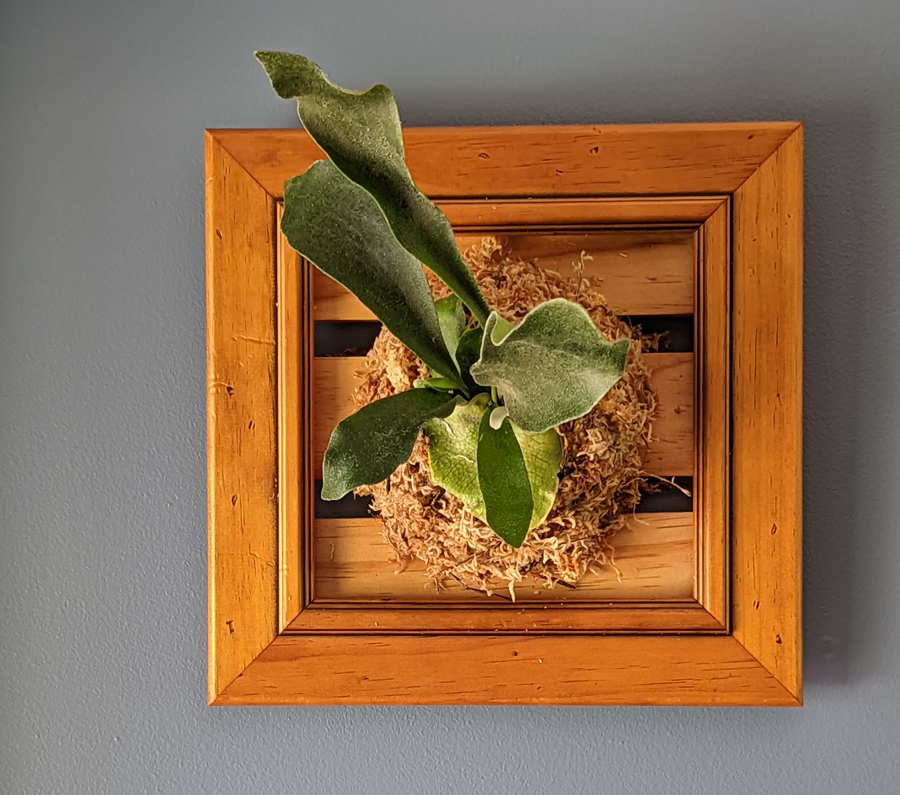
Upcycle old Picture Frames into Living Hanging ART!


Give those old picture frames a new lease on life and create a stunning living art piece for your home, garden or office. It’s the perfect project for those with limited garden space, as these art pieces hang vertically – All you need is some wall space!

It’s an easy to do weekend project for you and the family – Customizing an old picture frame takes no time at all, and the results are truly fantastic! Get the kids involved too! 


What is an Elkhorn?

Elkhorns are an epiphytic fern called Platycerium bifurcatum, and they naturally grow without soil by attaching themselves to trees, fallen logs and sometimes even rocks. It’s because of this that they make the perfect hanging vertical plants, offering architerural foliage and a burst greenery to a space.

What’s difference between an Elkhorn and a Staghorn?

Elkhorns (Platycerium bifurcatum) and Staghorns (Platycerium superbum) are both epiphytic in nature. The differences are the size of the plants, with Elkhorns having smaller, more narrow fronds. The main difference is the way it reproduces – The Elkhorn can multiply or pup quickly from ‘growing points’ on the plant. New leaves form from these growing points and soon develop into new, independent plants. With time, you can split up your Elkhorn to make more vertical frames, or leave them be for an epic mass display. The Staghorn on the other hand, reproduces from spores, and will generally remain one, albeit a lot larger, solitary plant.


Sourcing Frames

To start this project we first need to source some old picture frames. Now, you may have some lying around the house, but if not, do not fear, they are very easy to come by. Try Road side collections or Op-shops. It’s best to choose wooden frames, as we will be nailing a backing board to it (something to attach the Elkhorn to).


You will also need

- An Elkhorn plant

- Pine wood lengths

- Saw, glue and nails

- Sphagnum moss

- Fishing line


Customising the Frame

To start, we need to remove the glass, the backing and any nails or staples that are not needed. Usually the backings that come with picture frames are made of chipboard, and don’t have the strength to hold up a plant, so we will need to replace this with something stronger.

We have used pine lengths, 64mm in width. You can use hardwood, it will be more rot resistant, but you will find that most commercial wooden frames are already made of pine and are finished with a stain or varnish. We will be sealing the back of the frame to give it a longer life and have it hold up to the elements.

To create the backing board, simply cut pieces slightly shorter that the width of the frame, and attach with PVA glue and nails. Our design uses a couple of horizontal lengths of pine, with spaces in-between. These spaces will come in handy when tying the Elkhorn to the frame, and it offers a stylish look compared to a solid, one piece backing board.

Once the glue has dried, we can move on to sealing it. There are a plethora of different options and products that are available to seal raw pine. We have chosen linseed oil, as it will bring out the natural wood grain in the pine. It is also a natural product that won’t be toxic to the Elkhorn itself.


Attaching the Elkhorn

To attach the Elkhorn, we need to decide which way is up. Once an Elkhorn reaches a certain age, it will start developing a sheath. This will grow underneath the fronds and will eventually expand to envelop the plant and backing board on the frame. Identifying the sheath is simple enough – look for a flat rounded leaf growing from the base or ‘growing point’ of the plant. Spin the plant around so this sheath is at the bottom. Remove the Elkhorn from its growing pot and shake loose most of the potting mix. Try to retain a small amount of the potting mix around the root ball if you can. 


Laying the frame flat on a table, place a layer of hydrated sphagnum moss in the middle of your frame, then place the Elkhorn on top (remembering which way is up once it’s hung vertically!).  Then add more sphagnum moss around the edges to enclose the root ball and soil, being sure to leave the sheath exposed.

Using fishing line, wrap the Elkhorn (moss and all), several times around the backing board, threading the line through the gaps in the pine slats as you go. Cross over the line in different directions to make it more secure, and try to tuck the line in under sheath where you can. It does help to have an assistant at this point – If they can hold the frame and plant up from your working table, it makes it far easier to thread the line through the gaps in the frame and wrap it around the ball of moss. Once it’s sufficiently secured, you can tie off the ends of the line and trim the excess. Fishing line is very forgiving if you are not the neatest at this step - It is clear in colour, so very discreet and hidden!


Hanging

To hang the frame, we have attached some hardy string (you could use wire) with a staple gun on the back of the frame. Horticultural hooks come in handy to hang your frame from a verandah beam, or you can simply hang it just like a picture frame from a fixing on the wall.


How to care for an Elkhorn

Keep your Elkhorn in a well lit area, away from direct sunlight. You can keep them indoors, as long as the room is not too dark and the plant can receive plenty of light. It’s important that the sphagnum moss doesn’t dry out, so be sure to water them thoroughly and often to keep the moisture up to it. You can feed it during its growing season (spring to early autumn) with a diluted liquid fertilizer/seaweed solution, or with a small handful of control release fertilizer.


01 February, 2022

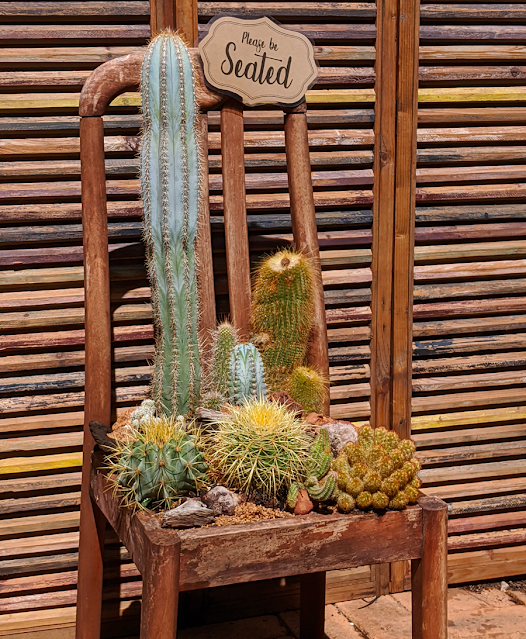
Garden ART: Old Chair to Charming Succulent Planter!

Cactus Chair

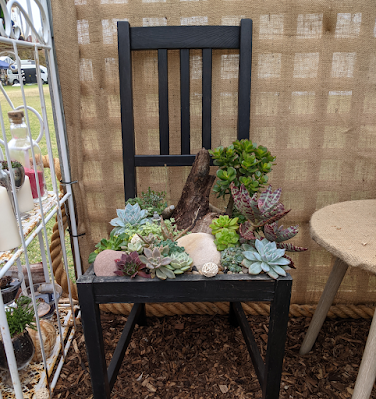
Have an old chair sitting around the house gathering dust? Well, why not UPCYCLE it into a charming succulent planter and create a unique feature for your garden that will be a talking point for all of your visitors. 

Chairs are plentiful at op-shops, recycling centres and road side collections, and they are often made of hard wood, which means a strong sturdy base that will tolerate both water and sunlight. A breezy weekend project, a succulent chair like this will look fabulous in all garden sizes, even the smallest of patio spaces.


Preparing the Chair:

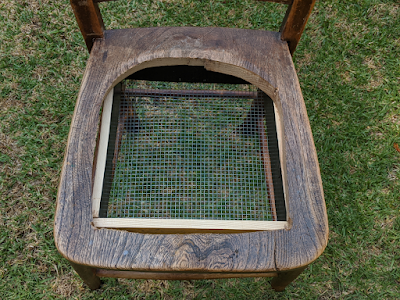
Creating a Hole – Some chairs come with a padded seat, that when removed reveal a perfect frame to plant into. Other chairs will require a hole to be cut in the seat. This extra step can be advantageous, as you can cut the hole to any size or shape – circular, square, curved at the back. Cut as much or as little of the seat away as you desire.

Building Depth – The deeper the planter box is in the chair, the more established the roots of your plants can become, extending the life of your display. And again, some chairs come with a perfect frame that’s a good 5cm – 10cm deep. But if this isn’t the case, you may need to add a wooden frame to the bottom of the seat to create some depth. If you’re not the best at DIY wood work, don’t be afraid! It doesn’t have to look super neat; you won’t see much of the frame once it is all planted up.

Succulent Chair Hole

Attaching a Bottom – We stapled wire mesh to the bottom of our seat’s frame. Mesh is ideal to use in this circumstance, as it allows water to drain freely. Don’t worry about your potting mix falling though just yet - We will cover that shortly.

Attaching mesh to the hole

Styling – You can paint your chair in a vibrant colour, or keep it natural like we have done. Shabby chic is popular right now, and is very easy to accomplish by painting on a colour and then sanding it half away. A coat of sealant will protect the wood and make it last longer, but isn’t entirely necessary if you don’t have the time.

Succulent Chair hole and frame


Planting it up:

Moss – Place a layer of sphagnum moss in the bottom of your frame. This will prevent potting mix falling through the mesh. Sphagnum Moss comes in dehydrated bricks and to prepare it, simply soak it in water for 10 to 15 minutes.

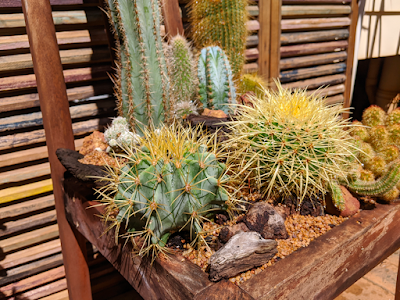
Potting Mix – Next, fill with a good quality, free draining cacti and succulent potting mix. Use large natural objects like rocks, logs or drift wood to create height in your base, and then fill in the spaces between with your mix.

Plants – Start by planting the largest feature plants first and work your way down to the small fillers. Combine succulents with similar colours and shapes for a classic, sophisticated design, or play with different colour and shape combinations for a more eclectic look. We have planted ours out entirely with Cacti – Taller ones at the back and squattier ones at the front. We also used a small log as a retaining wall in the middle to give the back section more height.

Cactus Chair

Mulch - Once you are happy with the design, water in the plants before applying a topping of gravel or small pebbles. A topping like this helps insulate the roots from intense heat or cold and prevents the mix from drying out and becoming water repellent. It is also helpful in securing plants into place, and preventing soil erosion. Water thoroughly a second time to allow the gravel to settle.

Succulent Chair


Maintenance:

Sun - Keep your chair in a nice, bright spot. Avoid direct sunlight in the afternoon and on days where the temperature is over 38 degrees. 

Succulent Chair

Water - Water thoroughly every couple of days when the weather is mild. Water more often in the hotter months and cut right back during winter.

Pruning and Fertiliser - Prune the foliage every so often to keep the plants nice and compact, and remove any dead foliage. Fertilise with a control release fertiliser as directed.

Cactus Chair - PGF2021

This is our cactus chair as part of our SPELLBOUND display at the Perth Garden Festival 2021. The sign reads: "Complaints department - Please take a seat..."


28 June, 2018

Little Aeonium - The perfect mini tree for a Fairy Garden!

Aeonium lindleyi var. viscatum 'Irish Bouquet'
Makes a wonderful fairy garden mini tree.


Such a gorgeous succuelnt this Aeonium lindleyi var. viscatum 'Irish Bouquet' . Winter is the peak growing season for Aeoniums, and what we love about this Aeonium is it's fleshy leaves that have an unusual waxy/rubbery texture.


Makes an amazing miniature tree for a fairy garden! You could also prune more vigorously for a miniature shrub:

Aeonium lindleyi var. viscatum 'Irish Bouquet'
Can also be pruned to make a mini shrub for a fairy garden.

Definitely one of our faves right now.

25 January, 2018

4 more DIY succulent valentine ideas!


Skip the chocolates this year, and those expensive flower arrangements that only last a week - Give your Valentine a special gift that will last! We have found 4 really simple, yet incredibly adorable Valentine's gift tutorials that your special someone will love!


Punnerific Pot
Found on Pinterest

Jazz up a terracotta pot with some paint, wind some jute around the lip of the pot and don't forget to include your favorite succulent pun. This one says "You had me at aloe", but some of my other favorite succulent themed puns include:
" I ALOE you VERA much"
"My life would SUCC without you" 
and "I'm so glad I pricked you" 

Plant a succulent of your choosing and you have one punnerific valentine's gift.


Succulent Book Planter
Found on Pinterest

I love this idea - so simple, yet really dramatic. I think the hardest part would be picking a book you are willing to drill a hole into (I suggest heading towards the tax law section of your local second hand book store). 

What's great about these is that they are more than just a temporary display. If you can drill the hole in your book stack the same size as your potted succulent, you can simply place your plant (pot and all) in there and remove when it needs watering. Wait until the water drains out the pot, and back into the book he goes. Brilliant! It could last for years to come! A perfect gift for succulent lovers of all types.


Succulent Dinosaur Planter

A quirky gift for that someone special in your life on Valentine's day. These guys are easier to make than you think, all you need is some sharp scissors or tin snips to cut a hole in a plastic dinosaur. Poke a hole or two in the bottom for drainage and plant away! I personally would love to see these with a cactus or two in them. You can leave the dinosaurs Au Naturel, or paint in funky colours - flouros, metallics, any colour that takes your fancy!


Succulent Miniature Garden
Found on Pinterest

Miniature gardens or fairy gardens don't have to be a grand affair. A simple pot with 2 or 3 succulents and 1 or 2 miniature accessories make a gorgeous display, and a great gift for Valentines Day.

Pick accessories that match in size and theme and you can't go wrong. I do recommend planting into a container with a drainage hole, so the garden can live on well into the future. See our range of Miniature Garden Accessories on our website.

So there you have it, 4 more ideas to DIY your way into any succulent lovers heart this Valentines Day. Be sure to check out our Valentine's article form last year - 4 Delightful DIY Succulent Valentine ideas - for more gift ideas and tutorials.

04 December, 2017

5 Succulent Christmas Ideas!


Stuck for inspiration on what Christmas decorations to include around your house this year? What about including succulents?! Here are some wonderful ideas on how to incorporate succulents onto your Christmas table:


Create a Living Succulent Christmas Tree Tutorial
by Maya Marin (eHow)

I've thought about making a succulent tree before using a cone shaped florist block, but this is so much better! By using chicken wire and sphagnum moss, this tree will not only look pretty just for the holidays, but with some occasional maintenance can last for months and months afterwards!

A little tip I have picked up that could be useful here is that I have never once used pre-made floristry pins. I find bending a bit of wire in half works just as well, and a roll of wire purchased from your local hardware store can make hundreds of pins, saving you a little bit money.

I really like the idea of incorporating the odd bunch of plastic red berries here and there. You know the ones, you can get them from pretty much any store selling Christmas decorations. Not expensive at all, and it will give your tree just that touch of red among the green shades of the succulents.

From Pinterest

I just love succulents mixed with candles. This is a great idea for a large Christmas table. A centre piece like this could be made from an inexpensive wooden box found at a discount store. Jazz it up with watered down white or light blue paint for that antique look.

This could be a temporary display, made up with sphagnum moss and succulent cuttings, or for a more permanent display, you could drill holes in the bottom and plant established succulents with a cacti and succulent potting mix. I would recommend lining the wood with plastic and poking holes into that as well. This just protects the wood from rotting, whilst still letting the water drain away.


From Pinterest
Speaking of Christmas table centre pieces, This succulent wreath with a candle in the middle would look very festive for Christmas lunch or dinner. What a brilliant idea, incorporating a string of battery operated led fairy lights for that touch of drama. Learn How to make a succulent wreath.


From Pinterest
Individual gifts that also serve as placeholders for the Christmas table? Yes, please! Who could resist a little keep sake they can take home after eating all that Christmas pudding. You can buy all sorts of pretty card at any craft shop these days, and with a nice pen you can write names onto them (or if you're like me and possess absolutely no calligraphy skills, you can cheat and use your printer :P ). Glue onto a bamboo skewer and spike into the succulent pot, or simply attach the placeholder card with a ribbon tied around the pot.


DIY | glitter succulent planters by Lolly Jane
A great way to pimp up a humble terracotta pot. Some paint, decoupage glue and glitter is all you need to make these fabulous succulent Christmas gifts. Full instructions can be found on Lolly Jane's Website.

I hope that provides you with a little inspiration on how to incorporate succulents into your Christmas decorating this holiday season. For more inspiration and ideas on Christmas succulent projects, check out our Pinterest board - Succulent Christmas Ideas. If you have any succulent Christmas ideas or projects you would like to share, please comment below!

29 August, 2017

Succulent Bonsai Planter Tutorial


Learn how to create your own simple, yet stylish succulent bonsai planter with this short tutorial video we created.

What you will need:

- Succulent plants (we used 50mm Classics)
- A large pebble
- A bonsai pot (must have a drainage hole!)
- Cacti and succulent potting mix
- Top dressing (such as gravel)
- Control release fertiliser
- Secateurs or cutters

What's great about bonsai pots is that they are shallow. Succulents tend to struggle in deeper containers, so shallow ones are the perfect size to keep their feet happy and well drained. Bonsai pots almost always have drainage holes too, which are important for succulent planters.

When choosing what plants to include, consider contrasting different heights, colours and textures.
Here we combined an upright, tall Crassula ovata 'Blue Bird', with a short growing Sedum species ground cover. The blue offers a nice contrast to the bright green and red of the groundcover, and we have both large, flat leaves and compact, tiny leaves in our combo.

Use a good quality, cacti and succulent mix. I can't stress this enough. Your normal potting mix retains too much water for succulents; they need more drainage than a normal mix can provide. You can improve the drainage of a cacti and succulent potting mix further by incorporating perlite into the mix.

It is up to you what top dressing to use. We used a fine grade black gravel, but other good toppings include pea gravel, fish tank pebbles or even sphagnum moss. Not only does the top dressing look fantastic and finish off a beautiful project like this, it helps protect the soil from the elements. It can keep the plants roots cool in summer as well as warm in winter.

Include a control release fertiliser into the mix when your planting your bonsai pot and that will keep your plants happy for at least 6 months. You can also use a seaweed solution or blood and bone solution to give them a kick start.


Care Information:
You can keep your bonsai planter either inside next to a window, or outside in a part shade position. It can be put in a full sun position once it has become established, but may still need to come under the verandah on extreme summer days.

Water your bonsai planter once a day in the summer or a little less often if keeping indoors. You can cut watering right back during winter to once a week, even once a fortnight depending on its location.

Prune often to keep compact and lush. This will also help to give the 'Blue Bird' a bonsai tree appearance.


Get succulents and supplies for your next succulent project at www.fickleprickles.com.au.
Delivery to anywhere in Western Australia.

02 November, 2016

4 DIY miniature garden accessories to try!


Succulent miniature gardens are not just for the little ones, us big kids get a kick out of creating and admiring miniature landscapes too. And why not, when in these times limited space in the backyard and limited budgets prevent us from making life size landscape gardens, these miniature creations are a great way to get those creative juices flowing and to get those green thumbs to work! 

Although it seems logical to start the planning of a miniature garden with your plant selection, we have actually found that choosing your accessories first helps with the plant selection process. So with that in mind, here are some accessory tutorials we found online that we personally can't wait to try out:


Lesley Shepard on about.com shows you step by step how you can create a mini fence with just wire and a pair of pliers. So simple, and yet so effective. I like how this fence doesn't have to be in a straight line, it can be curved around to match your miniature garden edging. This could work well around a lawn made from Sedum lydium. Pure magic!


If you prefer something a touch larger and more solid, then Lesley Shepard also has a tutorial on how to make a petite picket fence or gate using Popsicle sticks. I honestly thought cutting the top shape out of a pop stick would be too tricky, but Lesley is one clever lass and instead uses a small file to make an indent either side of the stick. Clever. A coat or two of paint and you have yourself a miniature white picket fence! You could pair this up with mini shrub type succulents, like A. 'Irish Bouquet' or Sempervivum 'Hen and Chicks' .


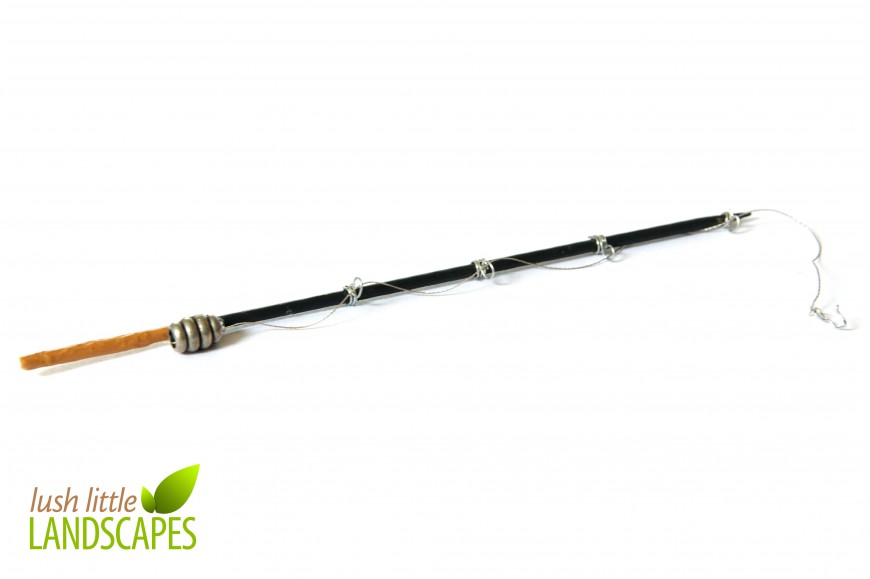
This was too cute to pass by, and although the idea of a seaside/swamp miniature garden hadn't really crossed my mind just yet, this mini fishing rod is surprisingly simple to make. Lush Little Landscapes provides step by step instructions on how you can make you own using a skewer, fishing line, wire and some small buttons for the reel. Maybe a jetty made out of pop sticks to accompany it? And for a swamp like succulents, Bergeranthus multiceps would make a great clump of reeds.


By Juise

And for something a little more challenging, why not make this house which comes complete with a door, a window and a very cute sconce on the front. thejuise.blogspot.com.au gives step by step instructions on how you can make your own house with just sticks and a hot glue gun. This house was made from Cherry tree branches, but I think eucalyptus sticks will give it that touch of 'Australiana'. A tree next to it, like a Crassula tetragona perhaps?

So we hope these great ideas inspire you to create your own succulent miniature gardens, and help with the choosing of your miniature garden plants. Happy projecting!


31 August, 2016

How to make a Succulent Wreath


A succulent wreath is simply a wire frame filled with sphagnum moss and a selection of succulent cuttings (and yes, they are real plants!).
You can hang them up on a wall, or on your front door, or lay them flat and use as a stunning table centre piece. They are incredibly easy to make and if watered regularly, can last for many years. Amaze your friends with your very own living piece of art! Here's how to get started.

What you will need:

A wreath wire frame
Sphagnum moss
Fishing Line
A selection of succulent cuttings or small rooted plants
A chop stick
The wire frame, sphagnum moss and the succulent plants can all be purchased from Fickle Prickles. The thin wire will be available at your local independent hardware store (support your local independents!).

How to assemble:

1. Hydrate your Sphagnum moss. Sphagnum moss comes dehydrated, and to use it in your succulent projects, simply add water and watch it rehydrate.

2. Fill up your wire frame. Simply take small handfuls of the hydrated sphagnum moss and mold it on top of your wire frame. Be very generous with the moss as you want your base to be quite solid so the roots of your plants have something to take hold of. Aim for a mound that is about 8cm tall.


3. Tie it on. Using the fishing line, secure the moss by wrapping it around both the frame and moss. Work your way around the frame until it is nice and secure. The wonderful thing about fishing line is that it is invisible, so you can use quite a bit without ruining the aesthetics of the project :)

4. Clean it up. Tuck in any straggly, loose pieces of sphagnum moss.

5. Prepare your succulents. You can use cuttings consisting of the tips of your succulents, or you can also use rosettes. Combine as little or as many different species in your design, the choice is yours. To prepare them, simply remove some of the lower leaves so you have a stem of around 1.5cm - 2cm. You can also use small succulents with roots (about tubestock size). Simply remove them from the pot and trim the root ball to a manageable size for your wreath. What's great about using rooted succulents is that the time it takes to establish your wreath is far less than if you use cuttings.

6. Plant your succulents. Use your chopsticks to make a small hole and simply place the stem of your cutting into the hole.  repeat until the frame is full. TIP - Create 'U' shaped pins from wire to secure cuttings into place. To plant in tubestock succulents with root balls, follow the same process, just make the hole a little bigger.


7. Grow them up. Lay your wreath flat until your cuttings are well rooted. This will take around 4 - 6 weeks, depending on the time of year. Keep watering them regularly during this time and don't allow it to dry out. Once established (give your cuttings a little tug and of they don't budge, they are established), hang up the wreath onto your favourite outdoor wall or lay flat and use as a table centre piece.

8. Maintenance. Keep your wreath in a partial shade position - This will help to stop your wreath drying out too quickly. Water your wreath once a day, and water thoroughly. Prune your wreath regularly to encourage new growth and keep your wreath nice and densely covered. You can fertilise your wreath with a seaweed and blood and bone solution, which you can buy from your local nursery. Use as directed.


As you can see, it is quite simple to make a beautiful piece of living art! And it an art piece that will keep on giving year after year with regular watering, fertilising and pruning.


UPDATE:

Here is a little video of me creating my first succulent living wreath. Kaye usually creates all the wonderful wreaths we sell at the Perth Garden Festival, and so I thought I would share with you a novice's attempt at a small wreath to PROVE just how easy it can be :)


See our blog post 'My First Succulent Wreath' for more info on this particular project.

01 February, 2016

4 Delightful DIY Succulent Valentine Ideas!


Skip the chocolates this year, and those expensive flower arrangements that only last a week - Give your Valentine a special gift that will last! We have found 4 really simple, yet incredibly adorable Valentine's gift tutorials that your special someone will love!


So this year, say I love you with a gift they will never forget. Happy Projecting!
Be sure to check out our latest Valentine's article - 4 More DIY Succulent Valentine Ideas - for more gift ideas and tutorials.


30 June, 2015

TIPS on choosing Succulents for your Projects!


When wanting to make a succulent project, whether it be a simple potted garden, or an elaborate wreath, deciding which plants to include in your arrangement can be a daunting task. Here are some tips to help make the decision process a little easier:


Consider different colour combinations that work with the colour of your container - Contrasting colours offer a vibrant look, where analogous colours are more natural and harmonious.


Combining different heights will give you a fantastic dynamic look. Place tall succulents in the centre of your design as a focal point, then small trailing succulents around the edges. Fill in the gaps with medium sized succulents. The effect will be a balanced look that is pleasing to the eye.


Use an odd number of multiples for particular species - It will balance out your design. Place multiples in a triangular pattern so that they are equally spaced apart.


Don't be afraid to pack many succulents into a small space. Succulents are more than happy to coexist with each other in tight places. Plus it will help to make your arrangement look more compact and lush.

Your imagination is your only limit! Scrounge around your home, back shed, local op-shop or salvage yard - You would be amazed at what spectacular artworks you can make out of the most unlikely of objects!
For more information on project tips, as well as instructions on how to make the Succulent Box pictured, head over to the Succulent ART website.